• Skip to primary navigation
  • Skip to main content
  • Skip to primary sidebar

Patricia Hruby Powell

Author, Storyteller, Dancer

  • Facebook
  • Goodreads
  • Amazon
  • Bluesky
  • LinkedIn
  • YouTube
  • Home
  • Books
    • Lift As You Climb: The Story of Ella Baker
    • Struttin’ with Some Barbecue
    • Loving vs. Virginia
    • Josephine: The Dazzling Life of Josephine Baker
    • Frog Brings Rain
    • Zinnia: How the Corn Was Saved
    • Blossom Tales: Flower Stories of Many Folk
  • Author Visits/Keynotes
  • Dance
  • One Woman Play
  • About
  • Blog
    • All Blog Entries
    • Book Reviews
    • Book News
    • Writing Tips
    • New post notifications
  • Schedule
  • Contact Me

All Blog Entries

“Brownstone” by Samuel Teer and Mar Julia

September 7, 2025 By Patricia Hruby Powell Leave a Comment

Fourteen-year-old Alumdena gets dropped off by her white mother at the fixer-upper house of her Guatemalan father in Brooklyn, so her mom can take a vacation, in the graphic novel, “Brownstone” (Versify 2024) by Samuel Teer and Mar Julia. Alumdena’s father, Xavier, seems happy to see her, but she doesn’t even know him. The house is a dump, he speaks rapid-fire Spanish, a language she doesn’t know, and he expects her to help fix the house.


The teen hears her father saying “Spanish sounding stuff,” but then she gets to slam a crowbar into the wall to tear off the plaster down to the brick. Maybe this won’t be completely bad, after all. She learns the word “bonito” and “cuidoso.” She’s left alone in the basement, but Isolda comes to the rescue to translate and offer information about her Guatemalan heritage. Our teen, about to turn fifteen, isn’t interested. And Isolda seems a little too close to her father.


After sleeping on the floor, Almudena, hungry, finds no food in the refrigerator. She makes her way to the bodega and buys donuts, gives one to the homeless guy, and dodges a crazy man on the street. Lorena brings by chile relleno for breakfast.


Emotions fly. Dad is angry that she went out on her own, the two grown women are jealous of each other. But everyone is kind and warm to Alumdena. Still, she quips, “Helloooo? Child with power tools here?” It’s hard not to like Alumdena.


She and her dad laugh over their body odor. Our girl goes to the laundromat and burns all of their clothes in the dryer. Practically all the players turn out to be related, including the bodega man. It’s like one big family. But now she has to wear a hand-me-down dress. A dress?!


Alumdena repurposes the dress and everything else they’ve given her, to make a scrappy but hip fashion statement. They name her “Off-Brand,” she continues to grimace, but maybe a little less so. It turns out Xavier helps everyone in the hood and is fixing this building to offer affordable housing for their community.


Gradually Alumdena, with the neighbors’ help and encouragement learns more and more Spanish, as more and more Spanish appears in the speech bubbles. She allows the group to dress her in a yellow gown for her quinceañera, her 15th birthday and coming-of-age party. We are all falling in love with this Hispanic community. And just before her mother returns at the end of the summer we hear the story of Alumdena’s origin. It’s a good one.


They will all become an extended family including the crazy man on the street, who rescues Alumdena when she gets lost.


This is a must-read, feel-good (eventually) coming-of-age story and the winner of the prestigious 2025 Printz Award.


Patricia Hruby Powell is the author of the award-winning books: Josephine; Lift As You Climb; Loving vs Virginia; and Struttin’With Some Barbecue all signed and for sale at Jane Addams bookstore. Her forthcoming books are about women’s suffrage, Martha Graham, and Ella Fitzgerald, as well as waterfowl. talesforallages.com


Filed Under: Book Reviews Tagged With: mar Julia, samuel teer

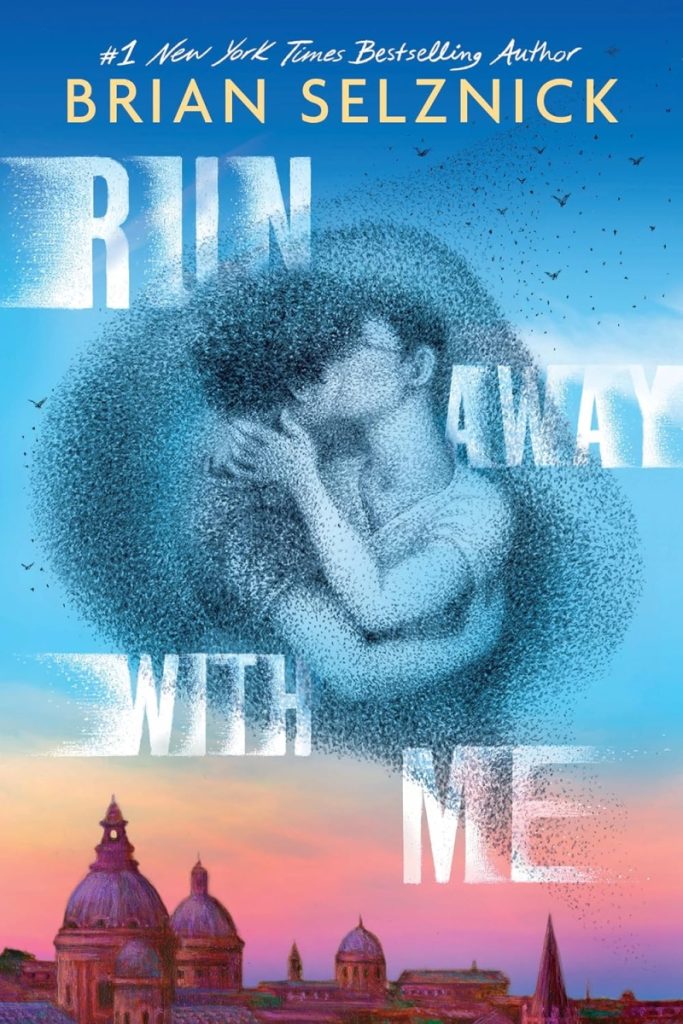
“Run Away With Me” by Brian Selznick

August 8, 2025 By Patricia Hruby Powell 2 Comments

A 16-year-old boy roams the streets of 1986 Rome while his mother works as an antique book restorer in “Run Away With Me” (Scholastic 2025) by Brian Selznick. First the boy sees a shadow, then a voice, then a beautiful Italian boy who looks like the statues of angels all over Rome.


As is true of all Selznick’s stories (“The Invention of Hugo Cabret” which was made into the movie, “Hugo”), they exist in a state of dreaminess. The first 100 pages of this one are his magnificent hatch drawings of Rome’s architecture, statuary, and of the boys. For quite a while I wondered if the Italian boy was an imagined character.


The Italian boy names our character “Danny” and Danny names his friend “Angelo.” We do not discover their real names until the end of the book. Angelo knows the city and tells stories of its vast history as they visit the places we’ve seen in the drawings. Clearly, they’re falling in love, and this is one of the most beautiful books about new love that I’ve ever read. All the time, the reader is falling in love with Rome.


One of the many intriguing facts is learning that there’s an underground river that feeds all the fountains of Rome.


Danny knows his time in Rome is limited and he’s counting the days. Angelo tells stories of the twins, Romulus and Remus, brothers raised by wolves, and the mythical founders of Rome. There are stories about Dante and his helper who sculpted the elephant on the top of an obelisk, which the boys are drawn to.


A wonderful passage hints at the lonely itinerant life Danny shares with his mother. “But she and I had come to Rome, a map had appeared, which led me through a crack in the world into another universe, and even though there was a time limit to the invisible passport I’d been issued, I was happy. The one thing I was unable to imagine was bringing these two dimensions together.”


Each of the stories that Angelo tells and that the two boys explore lead back to the mystery of his mother’s work. Each story arrives at the situation of two men in love with each other and how they navigate society’s restrictions on them. One story from a century ago tells of two men who pose as brothers so that they can live together undetected as gay men. Even in 1986 when this story is set it was much more difficult for two men to love each other openly.


The conclusion of the book is told by Selznick’s beautiful illustrations. If that doesn’t lure you to read this book, the end notes are outrageously intriguing. You’ll wish you could have been in Rome when the author was writing this book.


Patricia Hruby Powell is the author of the award-winning books: Josephine; Lift As You Climb; Loving vs Virginia; and Struttin’ With Some Barbecue all signed and for sale at Jane Addams bookstore. Her forthcoming books are about women’s suffrage, Martha Graham, and Ella Fitzgerald, as well as waterfowl. talesforallages.com
 

Filed Under: Book Reviews Tagged With: Brian Selznick, Rome

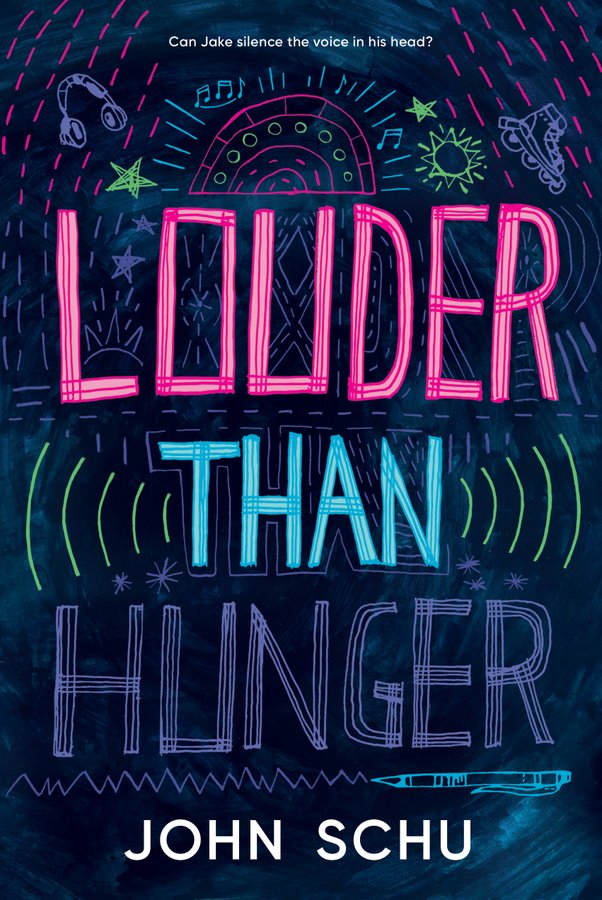
“Louder Than Hunger” by John Schu

July 6, 2025 By Patricia Hruby Powell Leave a Comment

Jake is bullied throughout middle school and responds by wanting to disappear. He develops anorexia nervosa, an eating disorder that effects more girls than boys, but an affliction from which more boys than girls die.


This novel in verse, “Louder Than Hunger” (Candlewick 2024), is based on the life of its author, teacher and book ambassador, John Schu, and his middle school experience. There is a lot of bullying at this age and lots of kids suffer as victims. This book might help some kids.


Jake shares a love of books and musicals with his grandmother. He’s an outsider, kids laugh at him and whisper about him. These are the same kids that liked him earlier in his school career. It’s so painful, that Jake tries to shrink himself down to nothing, by not eating.


Jake says: “The/ negative/ Voice/ inside/ my/ head/ talks/ nonstop. / It/ has/ since/ the/ middle/ of/ seventh/ grade./ It’s/ louder/ than/ the/ hunger/ in/ my/ stomach. / I/ weigh/ myself/ 10/ times/ per/ day./ Then/ 15/ times/ per/ day./ Then/ 20/ times/ per/ day./ The/ lower/ the/ number/ on/ the/ scale/ goes, / the/ bigger/ I/ feel. / The/ bigger/ I/ feel, / the/ less/ I/ eat. / The/ less/ I/ eat, / the/ less/ I/ feel.”


He goes in and out of residential treatment facilities to battle his demons. But he resists help from the nurses, his therapist, and other residents. He refuses to eat, nor will he participate in group therapy. But he does write in his journal.


The Voice tells him he’s not enough. He listens to music, but it won’t drown out the Voice. And then his beloved grandmother dies, making everything so much worse.


But he makes a friend in the facility. He starts to eat, participates in group and listens to his therapist. He begins to improve. He’s doing so well that he gets a day pass. His mother takes him to a musical. He’s so happy at the performance that in his head, he screams back at the Voice, louder than the Voice, telling it to leave him alone. But at a restaurant afterwards, he won’t eat and suffers a setback. Back in the facility he’s fitted with the dreaded feeding tube.


Jake has relapses but also moves forward. Writing in his journal helps. He must give himself permission to take up space. But as we near the end of this brave and heartfelt novel, we know that Jake is a survivor—just as Mr. Schu surely is.


Get this book into the hands of young readers. It could save a life.


Patricia Hruby Powell is the author of the award-winning books: Josephine; Lift As You Climb; Loving vs Virginia; and Struttin’ With Some Barbecue all signed and for sale at Jane Addams bookstore. Her forthcoming books are about women’s suffrage, Martha Graham, and Ella Fitzgerald, as well as waterfowl. talesforallages.com
 

Filed Under: Book Reviews Tagged With: anorexia, John Schu

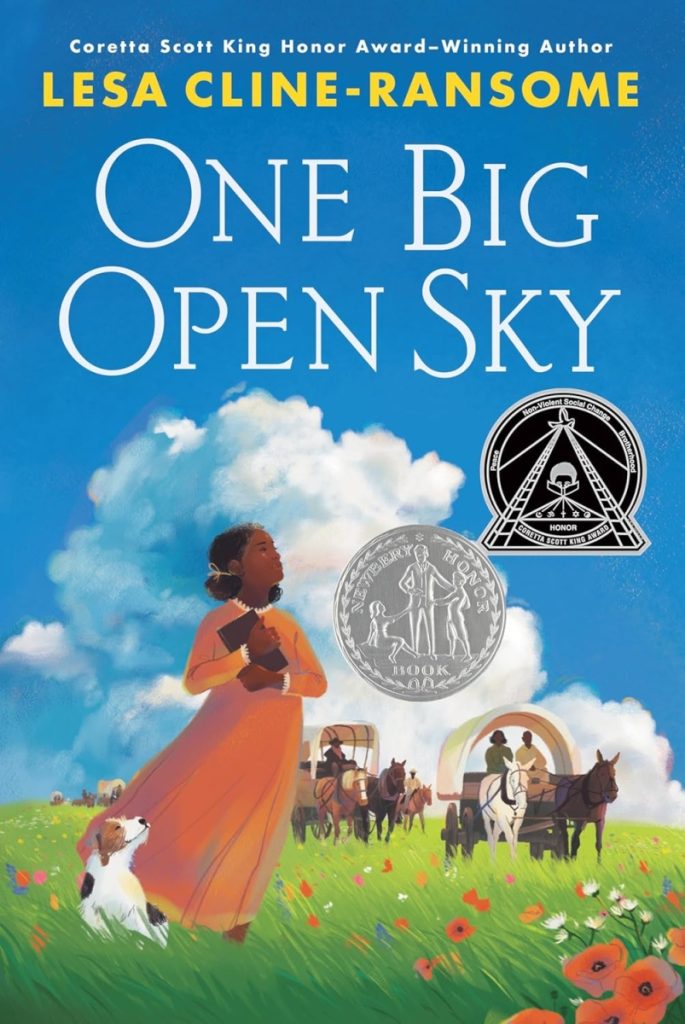
“One Big Open Sky” by Lesa Cline-Ransome

June 16, 2025 By Patricia Hruby Powell Leave a Comment

From 1879 Mississippi, Lettie and her impoverished Black family set out for Nebraska in a covered wagon, part of the westward migration in “One Big Open Sky” (Holiday House 2024) by Lesa Cline-Ransome. Her father made the decision to go, as was so often the norm for homesteaders, but Lettie’s mother Sylvia must decide on and prepare the provisions and care for the family of five along the way, even if she doesn’t want to take the journey.


Throughout the story, we see what’s different for Black migrants and what is probably the same for white folk. The men are in charge, but are they really? Where does the strength truly lie?


The story is told in the voices of three women starting with preteen Lettie. Lettie says, “There was the story before we left/ and the story after/ but the story in between/ is the part that’s the hardest.” The family suffers heart breaking hardships on their trip, as almost every family in the age of Manifest Destiny did.


There is discrimination against their all-Black group. They wait, with their covered wagons, for a scheduled ship to take them part of the distance up the Mississippi River, which will relieve them of having to walk every single step of the way.


Sylvia, says, “…to see/ the hurt/ of folks standing on the banks/ holding all they had/ hopes/ and dreams/ only to have them/ left behind/ when the ships came again/ and didn’t stop”. The ships never stop so they set out on foot. White men try to steal their mules and oxen, so they have to fight them off to save their families.


The third voice is Philomena’s. She is a strong young woman and an orphan, who is traveling alone to take a position as a teacher in Nebraska. Lettie writes an account of the journey and keeps track of what has been spent. Philomena, not that much older than Lettie, and a teacher, can look over her shoulder and help her school-learning. Philomena does the work of a man and becomes essential to the family, and they to her.


The story is not without sweet romance. A member of the group, Beau, fancies Philomena who is oblivious, until Sylvia sets her straight.


Lettie’s young brothers go out with the father, Thomas, and the men to hunt and fish but usually come back having gathered berries and plants, and only occasionally a rabbit. There are places along the way where supplies can be bought, but Lettie’s family has run very low on funds. Thomas, we realize, wants to be a leader, but makes irresponsible decisions which endanger everyone. And still the womenfolk must back him up.


Lettie loves her father deeply but is beginning to see his flaws. Lettie also notes that women cannot vote, but clearly the women in this story are towers of strength and intelligence.


Of course, there are the raging rivers that all pioneers had to cross and those are alarmingly dangerous.


This wonderful book won the Coretta Scott King Award as well as a Newbery Honor this last year, is a fast, fascinating, and insightful read.


Patricia Hruby Powell is the author of the award-winning books: Josephine; Lift As You Climb; Loving vs Virginia; and Struttin’ With Some Barbecue all signed and for sale at Jane Addams bookstore. Her forthcoming books are about women’s suffrage, Martha Graham, and Ella Fitzgerald, as well as waterfowl. talesforallages.com
 

Filed Under: Book Reviews Tagged With: Lesa Cline-Ransome

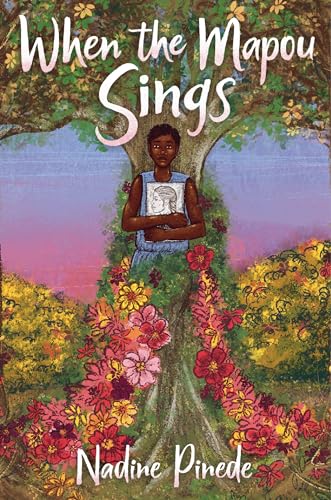
“When the Mapou Sings” by Nadine Pinede.

April 20, 2025 By Patricia Hruby Powell Leave a Comment

In exquisite yet accessible poetry, Nadine Pinede tells the story of Lucille’s coming of age in “When the Mapou Sings” (Candlewick 2024). The story is set in 1935 Haiti, when the nation is just emerging from the USA occupation that has lasted from 1915 to 1934. Haiti was first inhabited by the Taino people, then was occupied by Spain in 1496. The eastern half of the island of Hispaniola was ceded to the French in 1697. In 1791 African-born slaves and their descendants revolted against the French and in 1804, Haiti became an independent country ruled by itrs own citizens. But Haiti’s problems weren’t over.


Teenaged Lucille claims traces of all these cultures mentioned above.


On Lucille’s first day at the Mission School, she befriends beautiful Fifina, who is “drawing a bird/ in red earth with a twig/ from Mapou.” Mapou is the kapok tree, and Lucile is delighted to have befriended Fifina. “We walked back to the classroom/ inside me/ a sunrise.” The two girls soon make plans to start their own school: “We’ll teach girls how to carve, sew, draw, climb trees./ We’ll teach girls the songs of trees, flowers, birds, butterflies, the sun, moon, mountains, clouds.”


The mapou tree sings to Lucille, whose mother has died. The girl says, “A mother whose face/ I can’t remember/ and whose songs/ I can’t forget.


Their teacher, Sister Gilberte, shows the girls a map of her home—Belgium. She became a nun when her fiancé was killed in World War I. The nun says, “The trouble with love/ is the cracks in your heart/ never mend.”


The girls are the same age, but Fifina has matured into a woman sooner than Lucille and one day she disappears. In a dream the mapou tree tells Lucille to go to the village section chief. Something horrible has happened to Fifina at the section chief’s hand, and whereas Lucille doesn’t know exactly what happened, she knows the chief is corrupt and tells him so. This puts her in grave danger.


Lucille must leave her home and village. She’s hired as a servant for a wealthy Port-au-Prince woman. Foolishly she falls in love with the woman’s son. The educated young man helps raise Lucille’s consciousness concerning the corruption occurring in Haiti. Having become an activist in the reform movement, Lucille must move again to save herself. All the time she searches for Fifina.


Now she works for an America scholar who is doing fieldwork and studying Haitian voodoo and writing a novel. This turns out to be Zora Neal Hurston who is writing Their Eyes Were Watching God. Because of Hurston’s research and their activism, the two women find themselves fighting for their lives and the country of Haiti, all the time Lucille searches for her childhood friend and the man she loves.


This story, set in a time and place of important but little-known history, is not only poetry, but it’s a page-turner.


Patricia Hruby Powell is the author of the award-winning books: Josephine; Lift As You Climb; Loving vs Virginia; and Struttin’ With Some Barbecue all signed and for sale at Jane Addams bookstore. Her forthcoming books are about women’s suffrage, Martha Graham, and Ella Fitzgerald, as well as waterfowl. talesforallages.com


Filed Under: Book Reviews Tagged With: Nadine Pinede

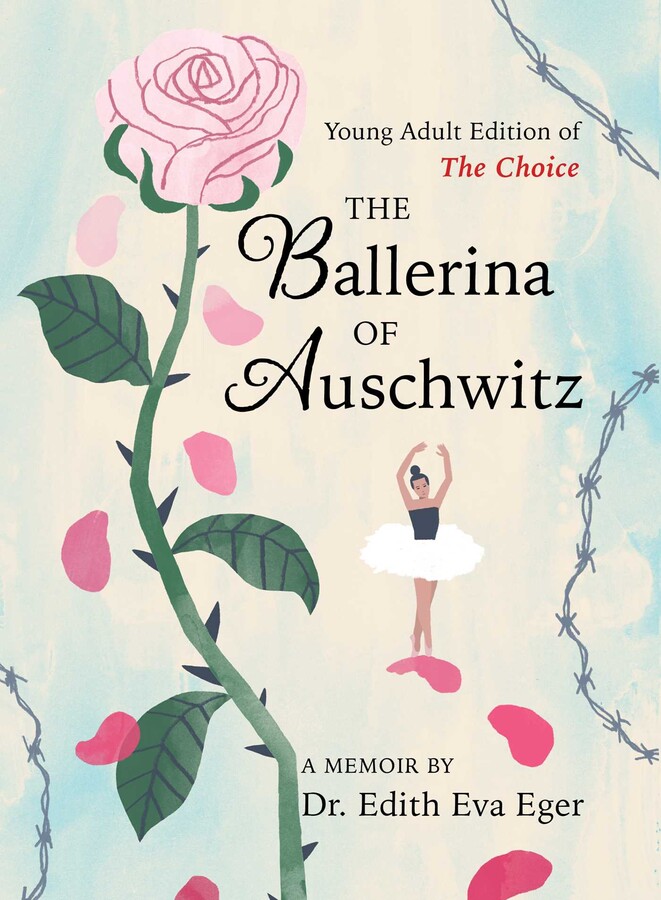
“The Ballerina of Auschwitz” by Dr. Edith Eva Eger

March 2, 2025 By Patricia Hruby Powell Leave a Comment

Dr. Edith Eva Eger, in her insightful memoir, “The Ballerina of Auschwitz” (Atheneum 2024) tells us about her Jewish family and her need for love in 1943 Hungary. She says, “I’m the runt of the family, the unwanted child.” Her eldest sister, Klara is a violin prodigy and away in Budapest at the conservatory of music. Magda, next eldest, is the prettiest, and a pianist. Their mother always tells Magda to watch what she eats. But her mother just throws up her hands at the lively Edith.


Edith likes her own thirteen-year-old lean and muscular body, suited to dancing and gymnastics although she envies Magda’s curves. Her father, a tailor, tells Edith she’s built for couture and will be the best dressed girl in town. She likes the attention her father bestows on her, but “Like my mother’s it is precious…and precarious. As though my worthiness of their love has less to do with me and more to do with their loneliness.”


Edith says of her parents’ love and admiration in general, “Magda and I have to work at getting something we are certain there will never be enough of; Klara has to worry that at any moment she might make a fatal mistake and lose it all.” Edith loves her dance classes and her personal dance improvisations. Dancing is her fantasy world where she can reinvent, enact, and sweeten her parents’ love relationship.


One day on the way to class, she loses her school tuition money and fears her father’s anger. “I’m scared, but the fear is more personal. It’s more about something I feel I’ve done wrong.” Soon the gestapo will take the family away and end her relatively simple life.


Edith falls in love with gentle Eric. “Our bond isn’t a casual crush, a puppy love. This is love in the face of war.” You are so happy for the young people, but you fear for the young Jewish pair as their love grows deeper and you know what lies ahead. Edith must stop attending her dance classes, because she’s Jewish. These are the laws.


Their normal family life, with regular growing pains, ends abruptly when the family is taken away. Klara is away at the conservatory and might be spared the camps, if she can convince the authorities that she’s not Jewish. But the rest of the family arrives at Auschwitz, not understanding what is happening. Edith is asked if her mother is her sister. Not understanding the gravity of the question and how to answer it, she tells the truth. “Mother.” And her mother is sent to the death showers.


Edith must live with her hideous, but innocent, betrayal. Eger does not spare us the horrific details of the camp, but we know she survives to write this memoir. And (spoiler) so does Magda. The year after their liberation is almost as traumatic as being in the camp and it is information that is not as densely covered in other books and movies, so especially interesting.


This young adult edition of the author’s memoir “The Choice” earned a Young Adult Notable Book from the Association of Jewish Libraries.


Patricia Hruby Powell is the author of the award-winning books: Josephine; Lift As You Climb; Loving vs Virginia; and Struttin’ With Some Barbecue all signed and for sale at Jane Addams bookstore. Her forthcoming books are about women’s suffrage, Martha Graham, and Ella Fitzgerald, as well as waterfowl. talesforallages.com


Filed Under: Book Reviews Tagged With: Edith Eva Eger, Holocaust

  • « Go to Previous Page
  • Go to page 1
  • Go to page 2
  • Go to page 3
  • Go to page 4
  • Go to page 5
  • Interim pages omitted …
  • Go to page 43
  • Go to Next Page »

Primary Sidebar

Things you can do

  • Log in
  • Entries feed
  • Comments feed
  • WordPress.org
  • [Un]Subscribe to Posts

Writing Tips

  • Show-Don’t-Tell
  • Metaphors and Similes
  • Book Launch Party – Advice and Ideas
  • Voice and First Lines
  • To Comply or Not To Comply
  • Writing to Evoke Emotion – Writing Tip
  • Character Development – Writing Tip
  • Research for Writers
  • “Smart Next Steps for Authors Who Are Finding Success” by Jenny Wise

Book Reviews

  • “Anger is Only a Shadow” by Elizabeth Acevedo
  • “How to Say Goodbye in Cuban” by Daniel Miyare
  • “The Weight of One Pomegranate” by Brynne Rebele-Henry
  • “The Most Dazzling Girl in Berlin” by Kip Wilson
  • “On the Wings of la Noche” by Vanessa L. Torres
  • “Song of a Blackbird” by Maria van Lieshout
  • “The Undead Fox of Deadwood Forest” by Aubrey Hartman
  • “Ida in Love and in Trouble” by Veronica Chambers
  • Guest Post: Growing Curiosity in Special Needs Kids Through Creative Learning at Home
  • “Bright Red Fruit” by Safia Elhillo
  • “Lunar New Year Love Story” by Gene Luen Yang and LeUyen Pham
  • “Brownstone” by Samuel Teer and Mar Julia
  • “Run Away With Me” by Brian Selznick
  • “Louder Than Hunger” by John Schu
  • “One Big Open Sky” by Lesa Cline-Ransome
  • “When the Mapou Sings” by Nadine Pinede.
  • “The Ballerina of Auschwitz” by Dr. Edith Eva Eger
  • “The Bletchley Riddle” by Ruta Sepetys and Steve Sheinkin
  • “Wild Dreamers” by Margarita Engle
  • “Buffalo Dreamer” by Violet Duncan
  • “How to Raise a Rhino” by Deb Aronson
  • “Mexikid: A Graphic Memoir” by Pedro Martín
  • “Keeping Pace” by Laurie Morrison
  • “The Enigma Girls: How Ten Teenagers Broke Ciphers, Kept Secrets, and Helped Win World War II” by Candace Fleming.
  • “The Eyes and the Impossible” by Dave Eggers
  • “Skater Boy” by Anthony Nerada
  • “The Girl I Am, Was, and Never Will Be: A Speculative Memoir of Transracial Adoption” by Shannon Gibney
  • “The Davenports” by Krystal Marquis
  • “Forget Me Not” by Alyson Derrick
  • “For Lamb” by Lesa Cline-Ransome
  • “The Lesbiana’s Guide to Catholic School” by Sonora Reyes
  • “High Spirits” by Camille Gomera-Tavarez
  • “Iveliz Explains it All” by Andrea Beatriz Arango
  • “Family of Liars” by E. Lockhart
  • “Self-Made Boys: A Great Gatsby Remix” by Anna-Marie McLemore
  • “I Could Not Do Otherwise: The Remarkable Life of Dr. Mary Edwards Walker” by Sara Latta
  • “The Life and Crimes of Hoodie Rosen” by Isaac Blum
  • “The Epic Story of Every Living Thing” by Deb Caletti
  • “Lines of Courage” by Jennifer A. Nielsen
  • “Ellen Outside the Lines” by A.J. Sass
  • Ideas for becoming an Activist
  • “Murder Among Friends” by Candace Fleming
  • “I Must Betray You” by Ruta Sepetys
  • “Concrete Rose” by Angie Thomas
  • “Huda F Are You?” by Huda Fahmy
  • “In the Wild Light” by Jeff Zentner
  • “The Great Godden” by Meg Rosoff
  • “Call and Response: The Story of Black Lives Matter” by Veronica Chambers with Jennifer Harlan
  • “From a Whisper to a Rallying Cry: The Killing of Vincent Chin and the Trial that Galvanized the Asian American Movement” by Paula Yoo
  • “Home is Not a Country” by Safia Elhillo
  • “Call Me Athena: Girl from Detroit” by Colby Cedar Smith
  • “All Thirteen: The Incredible Cave Rescue of the Thai Boys’ Soccer Team” by Christina Soontornvat
  • “They Went Left” by Monica Hesse
  • “A Sitting in St. James” by Rita Williams-Garcia
  • “Bones of a Saint” by Grant Farley
  • “Love is a Revolution” by Renee Watson
  • “Ana on the Edge” by A.J. Sass
  • “Echo Mountain” by Lauren Wolk
  • “Punching the Air” by Ibi Zoboi and Yusef Salaam
  • “Furia” by Yamile Saied Méndez
  • “This Promise of Change: One Girl’s Story in the Fight for School Equality” by JoAnn Allen Boyce and Debbie Levy
  • “King and the Dragonflies” by Kacen Callender
  • “Three Things I Know Are True” by Betty Culley
  • “Dancing at the Pity Party: a dead mom graphic memoir” by Tyler Feder
  • “Everything Sad is Untrue” by Daniel Nayeri
  • “The Black Kids” by Christina Hammonds Areed
  • “Someday We Will Fly” by Rachel DeWoskin
  • “Being Toffee” by Sarah Crossan
  • “Clap When You Land” by Elizabeth Acevedo
  • “Stamped: Racism, Antiracism, and You” by Jason Reynolds and Ibram X. Kendi
  • “The Great Nijinsky: God of Dance” by Lynn Curlee
  • “Dig” by A.S. King
  • “Where the World Ends” by Geraldine McCaughrean
  • “Degenerates” by J. Albert Mann
  • “Lovely War” by Julie Berry
  • “Brave Face: A Memoir: How I Survived Growing Up, Coming out, and Depression” by Shaun David Hutchinson
  • “Thirteen Doorways, Wolves Behind Them All” by Laura Ruby
  • “1919: The Year That Changed America” by Martin W. Sandler”
  • “Fountains of Silence” by Ruta Sepetys
  • “Blood Water Paint” by Joy McCullough
  • “Falling Over Sideways” by Jordan Sonnenblick
  • “The Downstairs Girl” by Stacey Lee
  • “Darius the Great is Not Okay” by Adib Khorram
  • “A Heart in a Body in the World” by Deb Caletti
  • “Stepsister” by Jennifer Donnelly
  • “A Few Red Drops: The Chicago Race Riot of 1919” by Claire Hartfield
  • “Anne Frank’s Diary: The Graphic Adaptation” retold by Ari Folman and illustrated by David Polonsky
  • “The War Outside” by Monica Hesse
  • “Sweep: The Story of a Girl and Her Monster” by Jonathan Auxier
  • “The Chaos of the Stars” by Kiersten White
  • “Pride” by Ibi Zoboi
  • “Boots on the Ground: America’s War in Vietnam” by Elizabeth Partridge
  • “Hey, Kiddo” by Jarrett J. Korosoczka
  • “The Truth As Told By Mason Buttle” by Leslie Connor
  • “Poet X” by Elizabeth Acevedo
  • “The Journey of Little Charlie” by Christopher Paul Curtis
  • “How to be a Good Creature: A Memoir in Thirteen Animals” by Sy Montgomery
  • “The House in Poplar Wood” by K.E. Ormsbee
  • “All That I Can Fix” by Crystal Chan
  • Wiki: “9 Wonderful Historical Novels for Young Readers”
  • “Hiding” by Henry Turner
  • “Price of Duty” by Todd Strasser
  • “We Are All That’s Left” by Carro Arcos
  • “Moonrise” by Sarah Crossan
  • “Orphan Monster Spy” by Matt Killeen
  • “Brazen: Rebel Ladies Who Rocked the World” by Pénélope Baglieu
  • “We Are Okay” by Nina LaCour
  • “The 57 Bus: A True Story of Two Teenagers and the Crime that Changed Their Lives” by Dashka Slater
  • “I Have Lost My Way” by Gayle Forman
  • “Turtles All the Way Down” by John Green
  • “Bull” by David Elliott
  • “Gem & Dixie” by Sara Zarr
  • “One of Us Is Lying” by Karen M. McManus
  • “Spinning” by Tillie Walden
  • “Long Way Down” by Jason Reynolds
  • “I Believe in a Thing Called Love” by Maurene Goo
  • “Far From the Tree” by Robin Benway
  • “What Girls Are Made Of” by Elana K. Arnold
  • “You Bring the Distant Near” by Mitali Perkins
  • “American Street” by Ibi Zoboi
  • “Genuine Fraud” by E. Lockhart
  • “Forest World” by Margarita Engle
  • “If I Was Your Girl” by Meredith Russo
  • “Vincent and Theo: The Van Gogh Brothers” by Deborah Heiligman
  • “The Bitter Side of Sweet” by Tara Sullivan
  • “Exit, Pursued by a Bear” by E.K. Johnston
  • “Girl Rising: Changing the World One Girl at a Time” by Tanya Lee Stone
  • “The Hate U Give” by Angie Thomas
  • “Dreamland Burning” by Jennifer Latham
  • “A List of Cages” by Robin Roe
  • “The Sun is Also a Star” by Nicola Yoon
  • “The Passion of Dolssa” by Julie Berry
  • “March: Book Three” by John Lewis, Andrew Aydin, Nate Powell
  • “Ghost” by Jason Reynolds
  • Second Loving vs. Virginia Giveaway – Thanksgiving
  • “Dare to Disappoint: Growing Up in Turkey” by Özge Samanci
  • Research for Loving vs. Virginia: a documentary novel
  • “Presenting Buffalo Bill: The Man Who Invented the Wild West” by Candace Fleming
  • First “Loving vs. Virginia” Give Away Winner
  • “Another Brooklyn” by Jacqueline Woodson
  • Why I wrote Loving vs. Virginia – Book Give Away
  • Graphic Novels: “Child Soldier,” “Roller Girl,” “Baba Yaga’s Assistant”
  • “The Lie Tree” by Frances Hardenge
  • “Most Dangerous: Daniel Ellsberg and the Secret History of the Vietnam War” by Steve Sheinkin
  • “Flannery” by Lisa Moore
  • “The Incident on the Bridge” by Laura McNeal
  • “Anna and the Swallow Man” by Gavriel Savit
  • “Ghosts of Heaven” by Marcus Sedgwick
  • “The Boys in the Boat” by Daniel James Brown
  • “Salt to the Sea” by Ruta Sepetys
  • “The Tightrope Walkers” by David Almond
  • “The Hired Girl” by Laura Amy Schlitz
  • “These Shallow Graves” by Jennifer Donnelly
  • “Don’t Fail Me Now” by Una LaMarche
  • “Under a Painted Sky” by Stacey Lee
  • “Last Leaves Falling” by Sarah Benwell
  • “Audacity” by Melanie Crowder
  • “The Boys Who Challenged Hitler” by Phillip Hoose
  • “Drowned City: Hurricane Katrina & New Orleans” by Don Brown
  • “Bone Gap” by Laura Ruby
  • “The Game of Love and Death” by Martha Brockenbrough
  • “Spinster: Making a Life of One’s Own” by Kate Bolick
  • “How I Discovered Poetry” by Marilyn Nelson
  • “The Rebellion of Miss Lucy Ann Lobdell by William Klaber
  • “How it Went Down” by Kekla Magoon
  • “A Time to Dance” by Padma Venkatraman
  • “All the Light We Cannot See” by Anthony Doer
  • “Taking Flight: From War Orphan to Star Ballerina” by Michaela DePrince
  • “Egg and Spoon” by Gregory Maguire
  • “This One Summer” by Jillian Tamaki and Mariko Tamaki
  • “The Unfinished Life of Addison Stone” by Adele Griffin
  • “I’ll Give You the Sun” by Jandy Nelson
  • “Brown Girl Dreaming” by Jacqueline Woodson
  • “Blood Guard” by Carter Roy
  • “Going Over” by Beth Kephart
  • “Lena Finkle’s Magic Barrel” by Anya Ulinich
  • “Josephine” Recorded Books, read by Lizan Mitchell SLJ starred review
  • “The Family Romanov: Murder, Rebellion & the Fall of Imperial Russia” by Candace Fleming
  • “The Port Chicago 50: Disaster, Mutiny, and the Fight for Civil Rights” by Steve Sheinkin
  • What How and Why do You Write?
  • “West of the Moon” by Margi Preus
  • “We Were Liars” by E. Lockhart
  • “Pure Grit: How American World War II Nurses Survived Battle and Prison Camp in the Pacific” by Mary Cronk Farrell
  • “All the Truth That’s In Me” by Julie Berry
  • Imprisoned: The Betrayal of Japanese Americans During World War II by Martin W. Sandler
  • “Love in the Time of Global Warming” by Francesca Lia Block
  • “The Nazi Hunters: How a Team of Spies and Survivors Captured the World’s Most Notorious Nazi” by Neal Bascomb
  • “The Weight of Water” by Sarah Crossan
  • “Fallout” by Todd Strasser (Candlewick 2013)
  • “Josephine” gets starred reviews from SLJ and Shelf Awareness
  • “March” by John Lewis, Andrew Aydin and Nate Powell
  • “Winger” by Andrew Smith
  • “The True Blue Scouts of Sugar Man Swamp” by Kathi Appelt
  • “Salt: A Story of Friendship in a Time of War” by Helen Frost
  • “Temple Grandin: How The Girl Who Loved Cows Embraced Autism and Changed the World” by Sy Montgomery
  • Rump: The True Story of Rumpelstiltskin by Liesl Shurtliff
  • “Paperboy” by Vince Vawter
  • Moonbird: A Year on the Wind with the Great Survivor B95 by Phillip Hoose
  • “One Came Home” by Amy Timberlake
  • “Titanic: Voices of the Disaster” by Deborah Hopkinson
  • “The Abandoned” by Paul Gallico
  • “Look Up! Bird-Watching in Your Own Backyard” by Annette LeBlanc Cate
  • “Best Friends Forever: A World War II Scrapbook” by Beverly Patt
  • “Lulu and the Duck in the Park” by Hilary McKay
  • “Navigating Early” by Clare Vanderpool
  • “Little White Duck: A Childhood in China” by Na Liu and Andrés Vera Martinez
  • “Wonder” by R.J. Palacio
  • “Liar and Spy” by Rebecca Stead
  • “The One and Only Ivan” by Katherine Applegate
  • “Bluefish” by Pat Schmatz
  • “The Dogs of Winter” by Bobbie Pyron
  • “Outside Your Window: A First Book of Nature” by Nicola Davies; illustrated by Mark Hearld
  • “A Dog’s Way Home” by Bobbie Pyron
  • “No Shelter Here: Making the World a Kinder Place for Dogs” by Rob Laidlaw
  • “About Average” by Andrew Clements
  • “Kindred Souls” by Patricia MacLachlan and “The Friendship Doll” by Kirby Larson
  • “Unseen Guest” by Maryrose Woods
  • “Countdown” by Deborah Wiles, a documentary novel
  • “Letters to Leo” by Amy Hest and “Bless This Mouse” by Lois Lowry
  • “Jefferson’s Sons: A Founding Father’s Secret Children” by Kimberly Brubaker Bradley
  • “Witches: The Absolutely True Tale of Disaster in Salem” by Rosalyn Schanzer
  • “Wonderstruck” by Brian Selznick
  • “Amelia Lost: The Life and Disappearance of Amelia Earhart,” by Candace Fleming
  • “Waiting for Magic” Patricia MacLachlan & “Saint Louis Armstrong Beach” Brenda Wood
  • Midnight Zoo by Sonya Hartnett
  • “Around the World” by Matt Phelan
  • Inside Out and Back Again by Thanhha Lai
  • “City of Orphans” by Avi
  • “How to Survive Middle School” by Donna Gephart
  • All the World’s a Stage: A Novel in Five Acts by Gretchen Woelfle
  • Dark Emperor & Other Poems of the Night by Joyce Sidman
  • “One Crazy Summer” by Rita Williams-Garcia
  • Heart of a Samurai (Newbery Honor) & The Secret World of Whales
  • Newbery 2011 – Moon Over Manifest & Turtle in Paradise
  • Words in the Dust by Trent Reedy
  • First Chapter Books–Some Really Good Ones
  • Cuba Books & interview with Antonio Sacre
  • The Incorrigible Children of Ashton Place – by Maryrose Wood – Books One and Two
  • Storyteller by Patricia Reilly Giff (Wendy Lamb Books 2010)

Copyright © 2026 Patricia Hruby Powell | Website by Pixel Mountain Web Design LLC